

When your body responds to pain or injury, inflammation is part of the natural healing process. While acute inflammation helps protect and repair tissues, prolonged or excessive inflammation can contribute to ongoing discomfort and slow recovery. One practical way to support your body during this phase is through thoughtful nutrition: choosing foods that help modulate the inflammatory response and supply the building blocks for healing. In this blog, we take an in-depth look into which foods can help fuel your recovery process and why, as well as providing tips on how to incorporate these foods into your daily diet and a 7 day anti-inflammatory meal plan. So, for the full lowdown on how to fuel and support recovery through nutrition, see below:
Anti-inflammatory eating quick wins
If you haven’t got time to read the whole blog though, see below for some top line ways to add anti-inflammatory foods to your diet.
- Have a homemade smoothie with some fresh or frozen berries, pineapple, and ginger in the morning
- Roast a large tray of mixed vegetables (peppers, carrots, broccoli, beetroot) to use across several meals
- Aim for 2–3 portions of oily fish per week
- Use extra virgin olive oil as your main cooking and dressing oil
- Keep nuts, seeds, and fruit ready for quick snacks
- Add turmeric to soups, stews, curries, roasted vegetables and egg dishes
- Replace a cup of tea or coffee a day with a cup of green tea
Anti-inflammatory foods to include in your diet
To find out more about foods that can help modulate your inflammatory response, and what the top anti-inflammatory foods to include in your diet are, see below:
Prioritise foods containing antioxidants to reduce inflammation
Many foods contain compounds with anti-inflammatory effects. Berries, for example, are rich in antioxidants called polyphenols that help neutralise free radicals and reduce inflammation at a cellular level. Colourful vegetables and leafy greens provide a broad spectrum of antioxidants, vitamins and minerals that support immune balance and tissue function. Extra-virgin olive oil contains oleocanthal, which has anti-inflammatory properties similar to mild pain-relieving medications. Turmeric and ginger are spices long used in traditional diets for their anti-inflammatory and antioxidant actions, and green tea delivers catechins that may calm inflammatory pathways. While fresh pineapple which contains an enzyme called bromelain is often cited for potential anti-inflammatory activity.
Increase healthy fats to aid recovery
Omega-3 fatty acids play a key role in inflammation modulation and recovery. These healthy fats – found in oily fish such as salmon, mackerel, sardines and herring, as well as in plant sources like chia seeds, flaxseed and walnuts – help regulate inflammatory processes and support joint and muscle comfort. Including such sources regularly can be a simple way to balance your intake of fats that influence the immune response.
Focus on protein to support tissue repair
Supporting tissue repair is another important nutritional goal for recovery. Protein is essential for rebuilding muscle and connective tissue after injury; whole foods like eggs provide high-quality protein and key amino acids needed for recovery. Collagen, a structural protein found in connective tissues, relies on nutrients such as vitamin C to be synthesised effectively. Enjoying sources of vitamin C – like citrus, kiwi, peppers and berries – alongside protein and collagen-rich foods like gelatin can support your body’s repair mechanisms.
Consider Vitamin D supplements for immune regulation
Certain nutrients can also be helpful when added thoughtfully to your diet. Vitamin D, for example, has roles in immune regulation and may support your body’s response to inflammation, especially in individuals with low levels due to limited sunlight exposure. For more information on the importance of Vitamin D, check out our Vitamin D blog.
Anti-inflammatory shopping list
The good news is that supporting your body’s natural inflammatory response doesn’t require a complicated diet. Small, consistent choices can make a meaningful difference. For a starter list of key foods to add to your shopping list and easy suggestions of how to incorporate them in to your daily diet – please see below:
Berries (blueberries, strawberries, raspberries) – rich in antioxidants called polyphenols
Easy ways to include:
• Add to porridge or Greek yogurt at breakfast
• Blend into a smoothie
• Keep frozen berries on hand for convenience
Leafy greens (spinach, kale, rocket, chard) – provide antioxidants, magnesium and vitamin K
Easy ways to include:
• Add a handful of leafy greens to omelettes or scrambled eggs
• Toss into soups, stews or curries
• Use as a base for salads instead of iceberg lettuce
Colourful vegetables (peppers, carrots, beetroot, broccoli) – packed with phytonutrients that help combat oxidative stress
Easy ways to include:
• Roast a large tray of mixed vegetables to add as a side to your meals throughout the week
• Add grated carrot or beetroot to salads
• Stir-fry with garlic and olive oil
Extra virgin olive oil – contains oleocanthal, known for anti-inflammatory properties
Easy ways to include:
• Use as your main dressing oil
• Drizzle over vegetables or soups before serving
• Replace butter or margarine with olive oil where appropriate
Oily fish (salmon, sardines, mackerel, herring) – rich in omega-3 fatty acids that help modulate inflammation
Easy ways to include:
• Aim for 2 portions per week
• Add tinned sardines or mackerel to salads
• Use salmon in wraps or grain bowls
Nuts and seeds (walnuts, chia seeds, flaxseed) – plant sources of omega-3s and fibre
Easy ways to include:
• Sprinkle chia or flaxseed onto cereal or yogurt
• Add walnuts to salads
• Blend into smoothies
Turmeric and ginger – contain compounds that support inflammatory balance
Easy ways to include:
• Add fresh ginger to stir-fries or teas
• Stir turmeric into soups, curries or scrambled eggs
• Make a simple “golden milk” with turmeric and warm milk
Fresh pineapple – contains bromelain, an enzyme linked to supporting recovery
Easy ways to include:
• Add to fruit salads
• Blend into smoothies
• Pair with natural yogurt
Green tea – provides catechins with antioxidant properties
Easy ways to include:
• Replace one daily coffee with green tea
• Enjoy iced green tea in warmer months
Anti-inflammatory eating made easy
If you’re keen to fuel your own recovery but don’t know where to start, we’ve put together a week’s meal plan to get you going – see below:
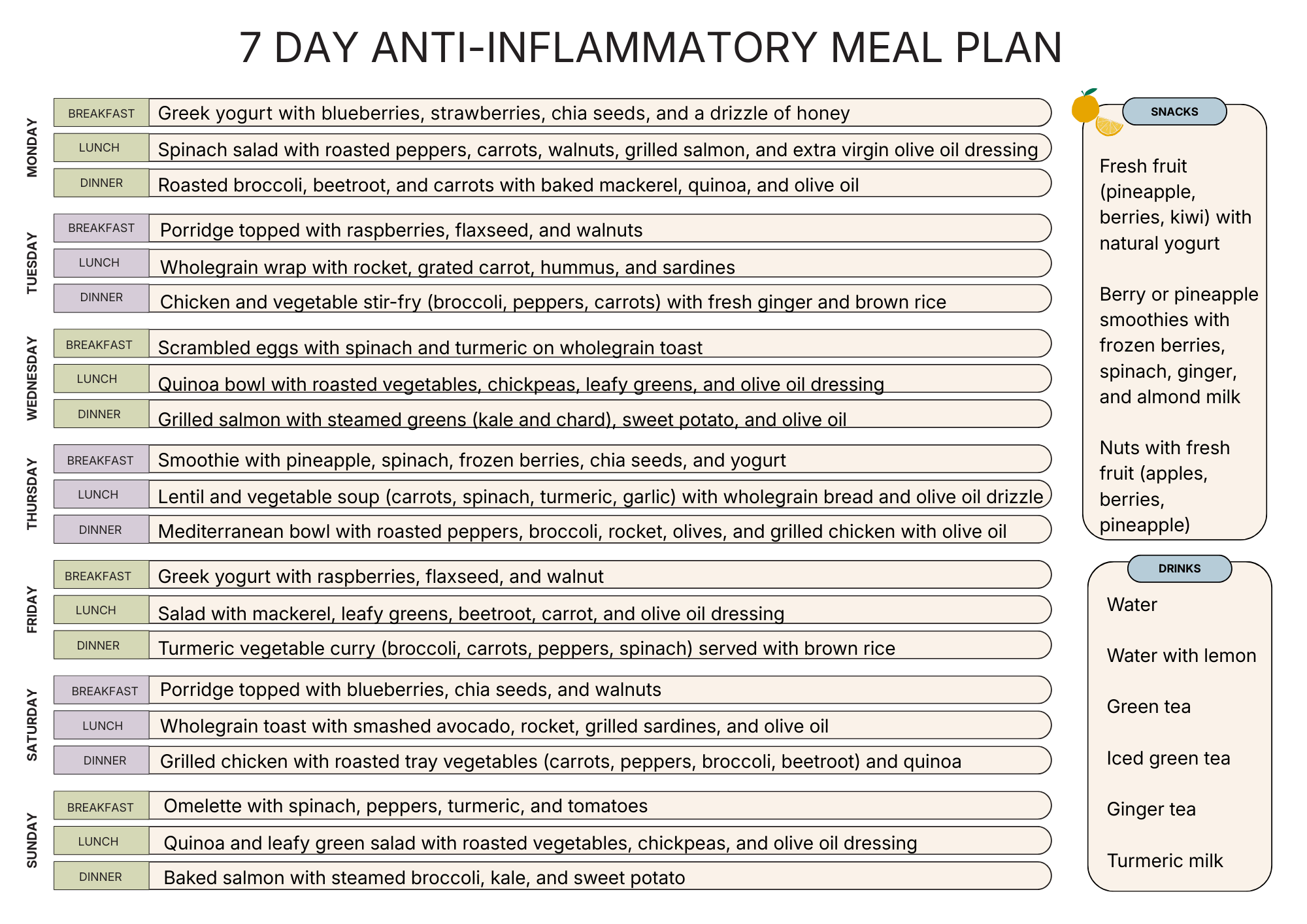
A balanced approach
It’s important to remember that no single food or supplement cures inflammation. However, a balanced pattern of eating, rich in whole, minimally processed foods, combined with good hydration, can help reduce the likelihood of prolonged inflammatory stress and support recovery alongside appropriate treatment, movement and rest.